|
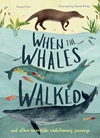
When the Whales Walked: And Other Incredible Evolutionary Journeys

Last updated Monday, April 6, 2026
Author: Dougal Dixon
Illustrator: Hannah Bailey
Date of Publication: 2018
ISBN: 1912413973
Grade Level: 2nd (GLCs: Click here for grade level guidelines.)
Date(s) Used: Apr. 2026
Synopsis:
From the moment life crawled out of the oceans and onto land, to when our primate ancestors climbed down from the trees, the history of Planet Earth is filled with incredible stories. This illustrated guide explores some of the most exciting and incredible events in evolution, through 13 case studies.
Step back in time and discover a world where whales once walked, crocodiles were warm-blooded, and snakes had legs! Meet terrifying giant birds, and tiny elephants living on islands in this fascinating creature guide like no other. Learn how whales once walked on four legs before taking to the oceans; how dinosaurs evolved into birds; and how the first cats were small and lived in trees.
| Discussion topics for before reading: |
| • |
Do you like animals? If so, which one is your favorite?
|
| • |
If you could be an animal, which animal would you be and why?
Vocabulary:
|
| • |
evolution - the process of living things changing over time and generations to better suit their environment
|
| • |
mutation - a mistake or small change in a living thing's DNA
|
| • |
natural selection - process where animals or plants with helpful traits are better at surviving and having babies
|
| Discussion topics for during/after reading: |
| • |
What is happening to the animals in the story as time passes?
|
| • |
which animal's evolutionary history did you find most interesting?
|
| • |
If you were to pick, would you rather live on land or in the ocean?
|
| Craft ideas: |
| • |
Draw your own Animal. Materials: Construction paper, markers, colored pencils. Take a sheet of construction paper. Create your own animal and give it features/traits that you find interesting.
|
| Special activities: |
| • |
Guess the animal. One player thinks of an animal and the other players ask questions to figure out what animal it is.
|
*Note: These craft ideas are just suggestions.
You can use them, but you don't have to use them.
You can expand upon them, or add your own twist.
Remember, though, that the focus of your time should
not be on the development and execution of a craft;
the focus should be on the read-aloud and the
enjoyment of the book!
|