|
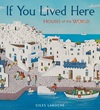
If You Lived Here: Houses of the World

Last updated Tuesday, February 17, 2026
Author: Giles Laroche
Date of Publication: 2011
ISBN: 0547238924
Grade Level: 3rd (GLCs: Click here for grade level guidelines.)
Date(s) Used: Feb. 2026
Synopsis:
Step into unique homes from around the world and discover the many fascinating ways in which people live and have lived. If you lived in the mountains of southern Spain, your bedroom might be carved out of a mountain. If you lived in a village in South Africa, the outside of your house might tell the story of your family. And if you lived in a floating green house in the Netherlands, you could rotate your house to watch both the sunrise and sunset.
With intricate bas-relief collages, author Giles Laroche uncovers the reason why each home was constructed the way in which it was, then lets us imagine what it would be like to live in homes so different from our own. Showing the tremendous variety of dwellings worldwide - log cabins, houses on stilts, cave dwellings, boathouses, and yurts - this book addresses why each house is build the way that it is. Reasons - such as blending into the landscape, confusing invaders, being able to travel with one's home, using whatever materials are at hand - are as varied as the homes themselves.
| Note to readers: |
| • |
This book follows a clear pattern. Each spread begins with a short, imaginative paragraph starting with “If you lived here…” After the paragraph, the page includes informational sections labeled House Type, Materials, Location, Date, and Fascinating Fact. You do not have to read all of these! Feel free to summarize or highlight key points to keep the pacing strong.
|
| • |
Pause after each house and invite observations. The illustrations are detailed, so children will notice small details (animals, tools, people working, clothing, landscape).
|
| • |
Emphasize the “why” behind each house. The book is less about decoration and more about reasons, such as weather, safety, available materials, travel, community living, and the environment.
|
| • |
The final page includes a world map that shows where each home is located. Plan to use this for discussion during or after reading!
|
| Discussion topics for before reading: |
| • |
Close your eyes and picture your home. What do you see first? What makes it feel like your home?
|
| • |
If you could choose one crazy location to live (underwater, on top of a mountain, inside a cave, floating on water) which would you pick?
|
| • |
What would be the hardest place to build a house? On a mountain? In the ocean? Underground?
|
| • |
Why don’t all houses look the same? What might make houses in snowy places different from houses in hot places?
Vocabulary:
|
| • |
Notched - Cut with small grooves or indents so pieces can fit together and lock in place.
|
| • |
Low-pitched (roof) - A roof that is not very steep or pointy, it has a gentle slope.
|
| • |
Eaves - The part of the roof that sticks out past the walls of a house. They help keep rain and snow from running down the walls.
|
| • |
Trudge - To walk slowly and heavily, especially when you’re tired or walking through snow or mud.
|
| • |
Stories / multistory - Stories are the levels or floors in a building. Multistory means a building has more than one floor.
|
| • |
Adobe - A type of clay mixed with water and straw that’s shaped into bricks and dried in the sun.
|
| • |
Invader - A person who enters a place by force or without permission.
|
| • |
Stilts - Tall posts that lift a building above the ground or water.
|
| • |
Canal - A man-made waterway where boats travel.
|
| • |
Moat - A deep ditch filled with water around a castle for protection.
|
| • |
Drawbridge - A bridge that can be raised or lowered to control who enters.
|
| • |
Compacted - Pressed together tightly.
|
| • |
Withstand - To stay strong and not get damaged by something, like wind, water, or shaking.
|
| • |
Whitewashed - Covered with a white coating/paint, often to reflect heat from the sun.
|
| • |
Mural - A large painting on a wall.
|
| • |
Gangway - A narrow bridge or walkway that connects something, like a boat or floating house, to land.
|
| • |
Buoyant - Able to float on water.
|
| Discussion topics for during/after reading: |
| • |
(After each house) What would be the BEST part about living here? What would be the HARDEST part?
|
| • |
Would you rather travel by boat, car, or something else?
|
| • |
Could you imagine taking your house down and moving it? What would you pack first?
|
| • |
(After the book) Which house would you MOST want to live in? Which house would you NOT want to live in? Why?
|
| • |
Which house surprised you the most? Why?
|
| • |
Did any houses remind you of homes you’ve seen in movies, video games, or real life?
|
| Special activities: |
| • |
Turn the different homes in the book into a guessing game! Tell the group you are going to describe a house using clues, but you won't say its name. Their job is to listen carefully and guess which house it is!
Give 3–5 clues, one at a time. After each clue, let students guess. If no one gets it, give the next clue.
|
*Note: These craft ideas are just suggestions.
You can use them, but you don't have to use them.
You can expand upon them, or add your own twist.
Remember, though, that the focus of your time should
not be on the development and execution of a craft;
the focus should be on the read-aloud and the
enjoyment of the book!
|